Since 1947
1947 to today
Partition left the princely state divided and disputed. Today the wider Kashmir region is administered in parts by India, Pakistan and China, and its status remains one of the world's longest-running disputes. This wing covers the major turning points and marks where accounts differ.
24 events · 4 exhibits
Events
August 1947
Partition
British India was divided into India and Pakistan on 14 and 15 August 1947. Jammu and Kashmir, a princely state with a Muslim majority and a Hindu ruler, did not join either country at first.
October 1947
Invasion and accession
ContestedOn 22 October 1947 armed tribesmen from Pakistan's North-West Frontier Province entered the state. Maharaja Hari Singh signed an Instrument of Accession to India, and Indian troops were flown into Srinagar on 27 October. The first war between India and Pakistan followed.
In the museumMaharaja Hari Singh
Late 1947
Violence against civilians
ContestedPartition-era killings reached the state in late 1947. Large numbers of Muslims were killed in the Jammu region, and Hindus and Sikhs were killed in places such as Muzaffarabad and Mirpur.
1 November 1947
Revolt in Gilgit
The Gilgit Scouts revolted against the Maharaja's governor, and the Gilgit region came under Pakistani control.
1 January 1949
Ceasefire and a promised vote
A ceasefire arranged by the United Nations ended the first war and left the former state divided along a ceasefire line. UN resolutions called for a plebiscite, a public vote on the state's future, which has never been held.
1949
Article 370
India's constitution included Article 370, which gave Jammu and Kashmir special autonomous status, allowing the state its own constitution and limiting which Indian laws applied there.
August 1953
Sheikh Abdullah is dismissed
Sheikh Abdullah, then Prime Minister of Jammu and Kashmir, was dismissed and arrested. He spent most of the next two decades in detention.
In the museumSheikh Mohammad Abdullah
1962
War with China and Aksai Chin
China had built a road across Aksai Chin, on the eastern edge of the former state, in the 1950s. After the 1962 war between India and China, Aksai Chin stayed under Chinese control.
December 1963 to January 1964
The relic disappears
The relic at Hazratbal went missing in December 1963, bringing huge crowds onto the streets across the Valley. It was recovered in early January 1964 and identified as genuine by religious leaders.
In the museumHazratbal Shrine
1965
The second war
India and Pakistan fought a second war over Kashmir. The Tashkent Declaration of January 1966 returned both sides to their earlier positions.
1972
The Line of Control
After the 1971 war, India and Pakistan signed the Simla Agreement. The old ceasefire line became the Line of Control, the de facto border that still divides the region.
1975
Sheikh Abdullah returns
An accord between Indira Gandhi and Sheikh Abdullah brought him back to power as Chief Minister, a post he held until his death in 1982.
In the museumSheikh Mohammad Abdullah
1984
Siachen
India took control of the Siachen Glacier in the far north in 1984, beginning the highest-altitude military standoff in the world.
1987
A disputed election
ContestedThe 1987 state election was widely alleged to have been rigged against a coalition of opposition parties, the Muslim United Front. Many historians see it as a turning point towards armed revolt.
1989 to 1990
Armed insurgency begins
An armed movement against Indian rule took hold in the Valley. Decades of violence followed, with tens of thousands of people killed, among them civilians, militants and members of the security forces.
21 January 1990
Gawkadal
Security forces fired on protesters at the Gawkadal bridge in Srinagar, killing dozens of people. It was one of the deadliest single incidents of the early insurgency.
1990
The Kashmiri Pandits leave the Valley
ContestedAmid targeted killings and threats, the large majority of the Valley's Kashmiri Pandits left their homes in early 1990. Most have not returned.
1999
Kargil
Fighting broke out on the heights above Kargil after Pakistani forces and militants occupied positions on the Indian side of the Line of Control. India regained the positions after about two months of fighting.
8 October 2005
The earthquake
A powerful earthquake centred near Muzaffarabad killed more than 80,000 people, most of them in Pakistan-administered Kashmir and neighbouring areas, and destroyed whole towns.
September 2014
The floods
The Jhelum burst its banks after days of heavy rain, flooding much of Srinagar and large parts of the Valley for weeks.
In the museumThe Jhelum
5 August 2019
Special status revoked
India ended the special status given by Article 370 and split the state into two union territories, Jammu and Kashmir, and Ladakh, which took effect on 31 October 2019. A long communications shutdown followed in the Valley.
2024
Elections return
Jammu and Kashmir held its first assembly election in ten years. The National Conference won the most seats and formed the government.
April to May 2025
Pahalgam and a brief war
On 22 April 2025 gunmen killed 26 people, most of them tourists, in the Baisaran meadow near Pahalgam. In May India and Pakistan exchanged military strikes for several days before agreeing to a ceasefire on 10 May.
In the museumPahalgam
June 2025
The railway reaches the Valley
A direct rail line connected the Valley to the rest of India's railway network for the first time, crossing the Chenab Rail Bridge, the highest railway arch bridge in the world.
In the museumChenab Rail Bridge
In this wing
- Text placard
Sheikh Mohammad Abdullah
1905 to 1982
Sher-e-Kashmir, the most influential Kashmiri leader of the 20th century.
- Text placard
Agha Shahid Ali
1949 to 2001
The poet who carried Kashmir into English verse.
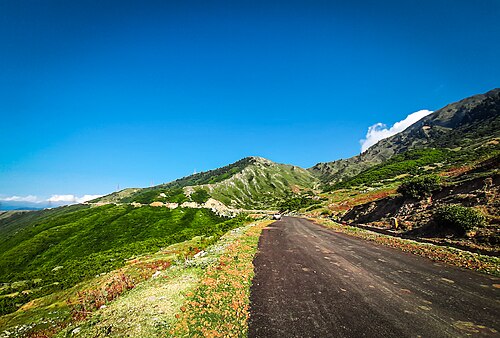
Jawahar Tunnel
1956
The tunnel that kept the Valley connected in winter.
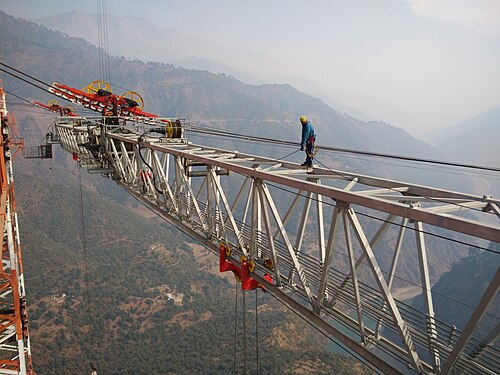
Chenab Rail Bridge
Opened 2025
The highest railway arch bridge in the world.
Further reading for this period
Books that cover this period. They are places to read further, not sources for any single sentence on this page.
- Kashmir: Roots of Conflict, Paths to PeaceSumantra Bose, 2003
- Kashmir in ConflictVictoria Schofield, 2000
- Understanding Kashmir and KashmirisChristopher Snedden, 2015
- Kashmir: History, Politics, RepresentationChitralekha Zutshi (editor), 2017